AMEF Calls for Stronger Humanitarian Action as World Humanitarian Day Is Marked in Kumba
During a panel discussion at the AMEF Head Office in Kumba, the organisation called for stronger humanitarian action in Cameroon under the theme “Act For Humanity.” AMEF urged greater protection for civilians and humanitarian workers, increased funding and support for local organisations, and reaffirmed its commitment to vulnerable communities and resilience.
Tamfu Ciduan Ndimbie
Publisher · Kumba, Cameroon
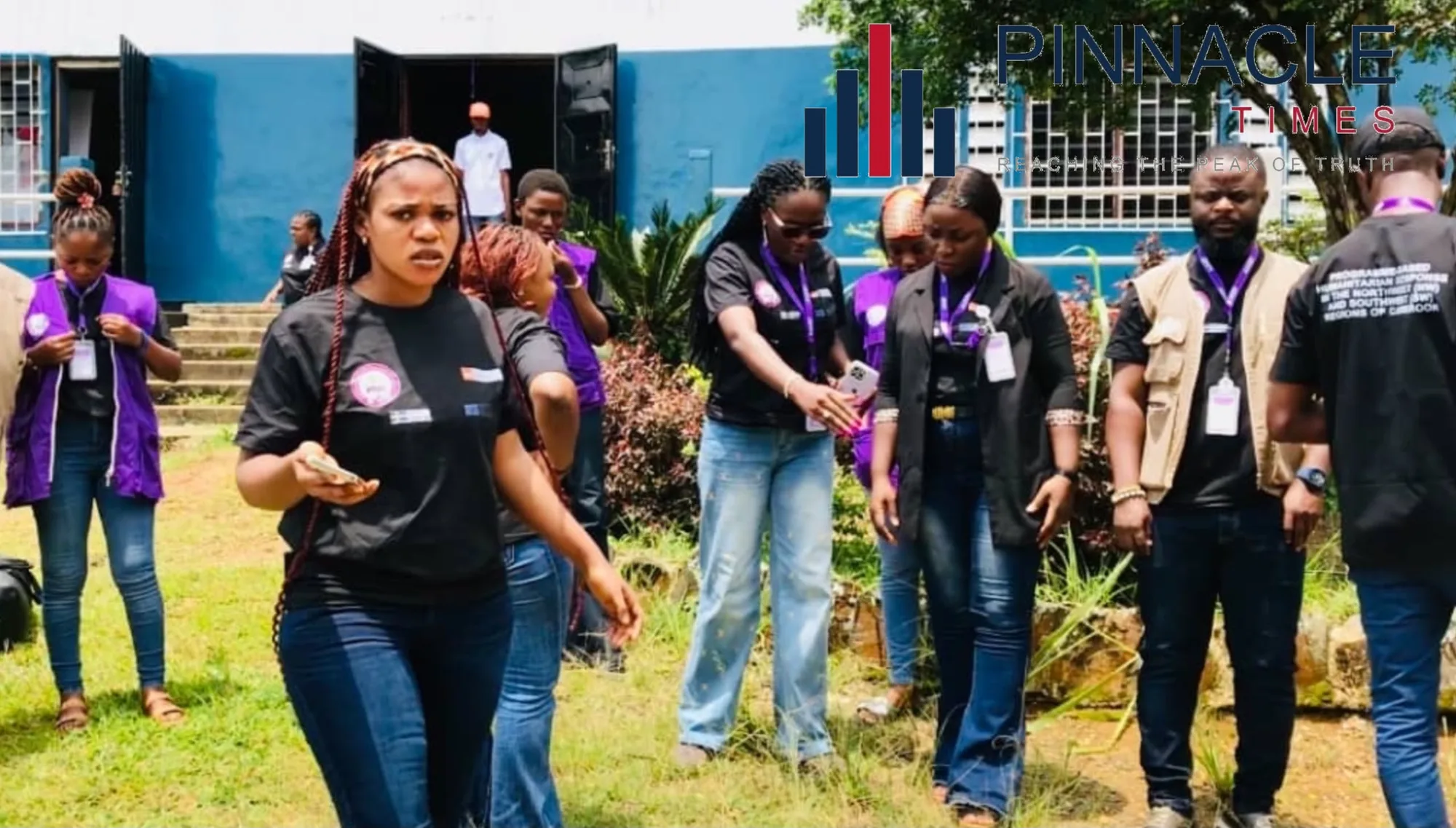
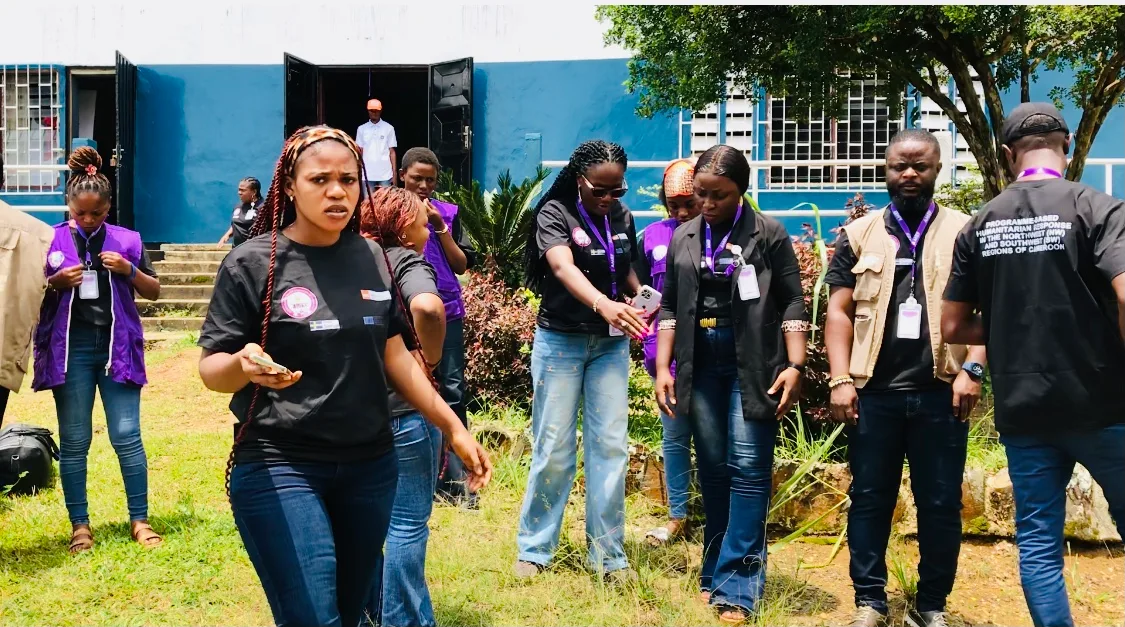
Members of AMAF, durning activities marking the 2026 International Humanitarian day in Kumba, Meme Division of Cameroon's Southwest Region
Kumba, Cameroon — The Authentique Memorial Empowerment Foundation (AMEF) has called for stronger protection of civilians, increased humanitarian funding and greater support for local humanitarian organisations as Cameroon commemorates World Humanitarian Day 2026 under the theme “Act For Humanity.”
The organisation said the humanitarian situation in Cameroon remains critical, with about 2.9 million people requiring humanitarian assistance.
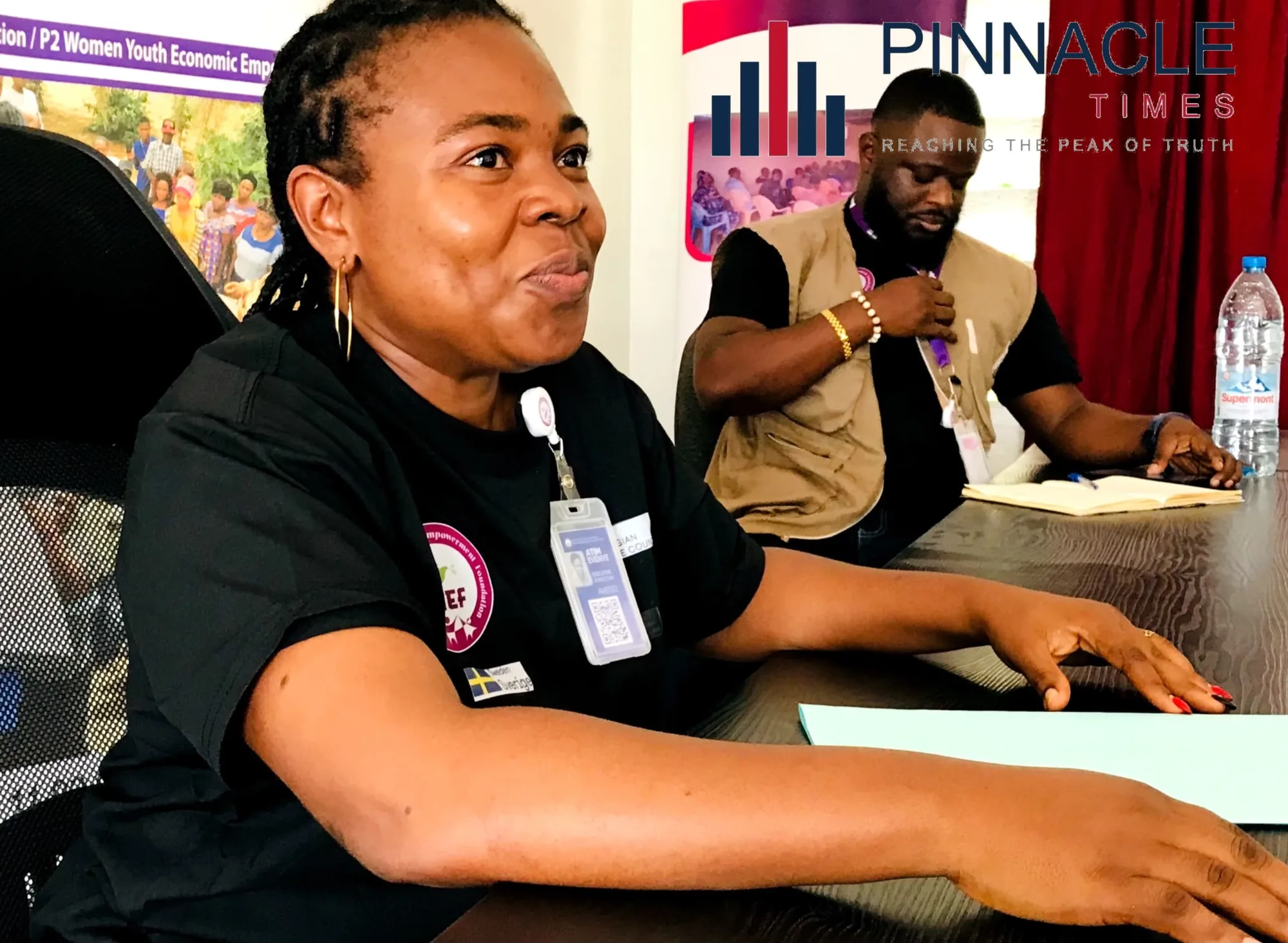
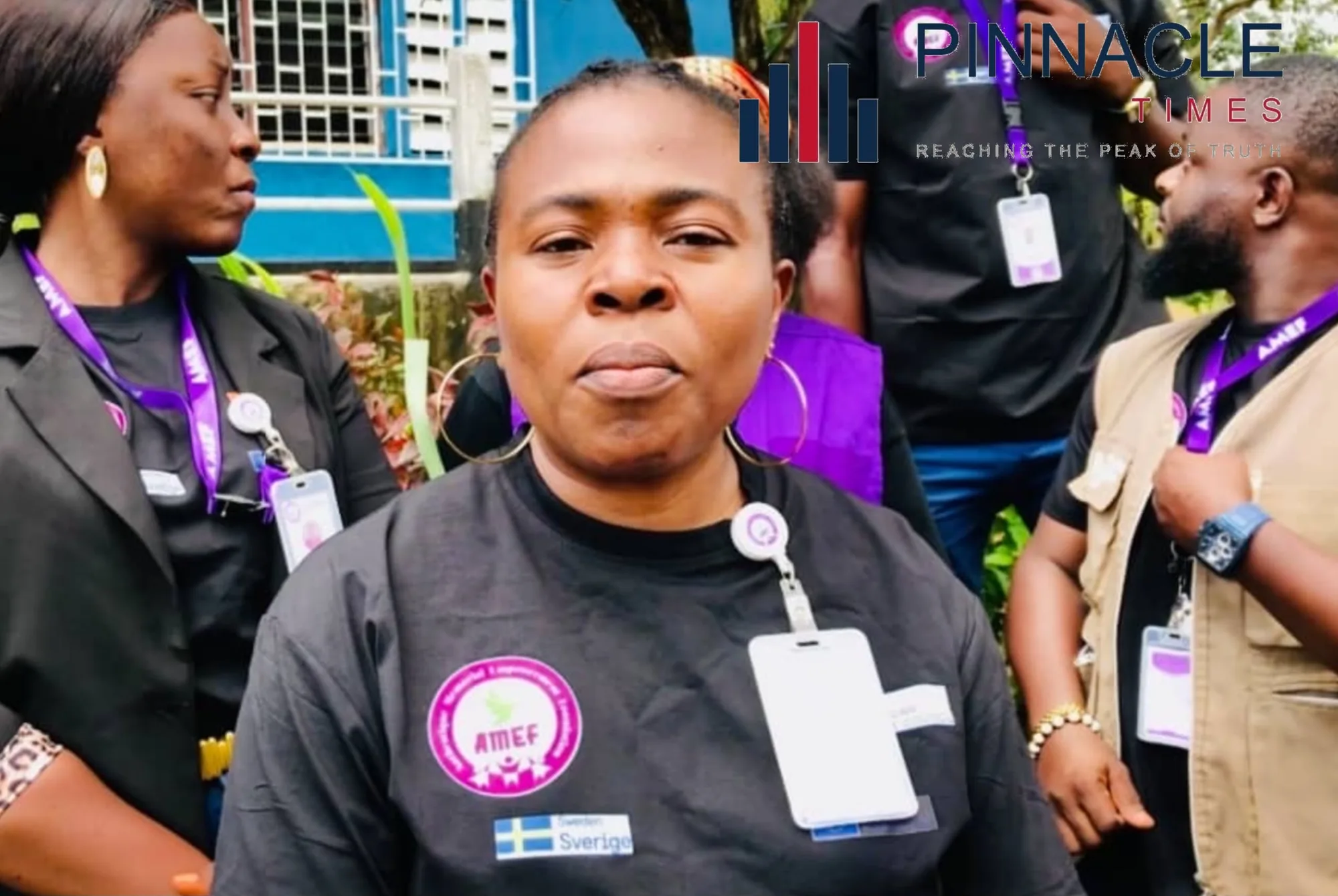
In a statement signed by AMEF Executive Director Atim Evenye, the organisation highlighted the challenges facing displaced families, children, women, girls and other vulnerable groups, particularly in crisis-affected communities.
AMEF stressed that humanitarian action should go beyond providing relief to strengthening the resilience, dignity and capacity of affected communities.
The foundation also highlighted its work in education, protection, peacebuilding, livelihoods and community resilience, including support to more than 15,000 crisis-affected children through community-based education initiatives.
AMEF called on government authorities, donors, humanitarian organisations, civil society and communities to work together to protect civilians and humanitarian workers, ensure safe humanitarian access and respect humanitarian principles.
It also advocated for greater investment in local humanitarian organisations, arguing that local actors understand their communities and are often among the first responders during crises.
The organisation reaffirmed its commitment to supporting vulnerable populations and strengthening locally led humanitarian action, urging all stakeholders to “Act for Humanity, Protect Human Dignity, Support Local Action and Leave No One Behind.”
BELOW IS THE FULL STATEMENT OF AMEF's EXECUTIVE DIRECTOR DURING THE WORLD HUMANITARIAN DAY 2026
PRESS STATEMENT BY THE EXECUTIVE DIRECTOR OF AUTHENTIQUE MEMORIAL EMPOWERMENT FOUNDATION (AMEF) WORLD HUMANITARIAN DAY 2026 Theme: Act For Humanity 19 August 2026
Distinguished representatives of the Government of Cameroon, Representatives of the United Nations and the humanitarian community, Humanitarian and development partners, Civil society and community-based organisations, Traditional and religious leaders, Humanitarian workers and volunteers, Members of the media, Ladies and gentlemen,
Today, Authentique Memorial Empowerment Foundation AMEF joins the humanitarian community in Cameroon, and particularly humanitarian actors in the South-West Region, to commemorate World Humanitarian Day 2026 under the global call to action: Act For Humanity.
This year's commemoration comes at a critical moment for humanitarian action in Cameroon. Approximately 2.9 million people require humanitarian assistance, while the humanitarian response continues to face a significant funding gap. Behind these figures are children unable to access education, families displaced from their homes, women and girls facing protection risks, communities struggling to access basic services, and humanitarian workers operating in increasingly complex environments.
These realities remind us that humanitarian action cannot be reduced to statistics. Behind every number is a human life, a family, a story and a future.
For AMEF, therefore, Act For Humanity is not simply a slogan. It is a responsibility. It means standing with communities affected by crisis. It means protecting human dignity. It means ensuring that children can continue learning even in difficult circumstances. It means supporting women, girls and other vulnerable groups. It means listening to communities and recognising them not merely as recipients of assistance, but as partners and agents of their own recovery and resilience.
AMEF: ACTING WITH AND FOR COMMUNITIES:
For nearly two decades, AMEF has worked alongside communities in the South-West and North-West Regions of Cameroon. Our experience has taught us one fundamental lesson: Humanitarian action is most effective when it is rooted in the realities, capacities and aspirations of affected communities.
Communities are not passive victims. They possess knowledge, leadership, networks and remarkable resilience. In times of crisis, communities have repeatedly demonstrated their ability to protect one another, support displaced families, keep children learning and maintain essential services despite extraordinary challenges. Our responsibility as humanitarian actors is therefore not to replace community capacity, but to strengthen, connect and resource it.
This principle is at the heart of AMEF's work across four interconnected areas: education, protection, peacebuilding, and livelihoods and community resilience.
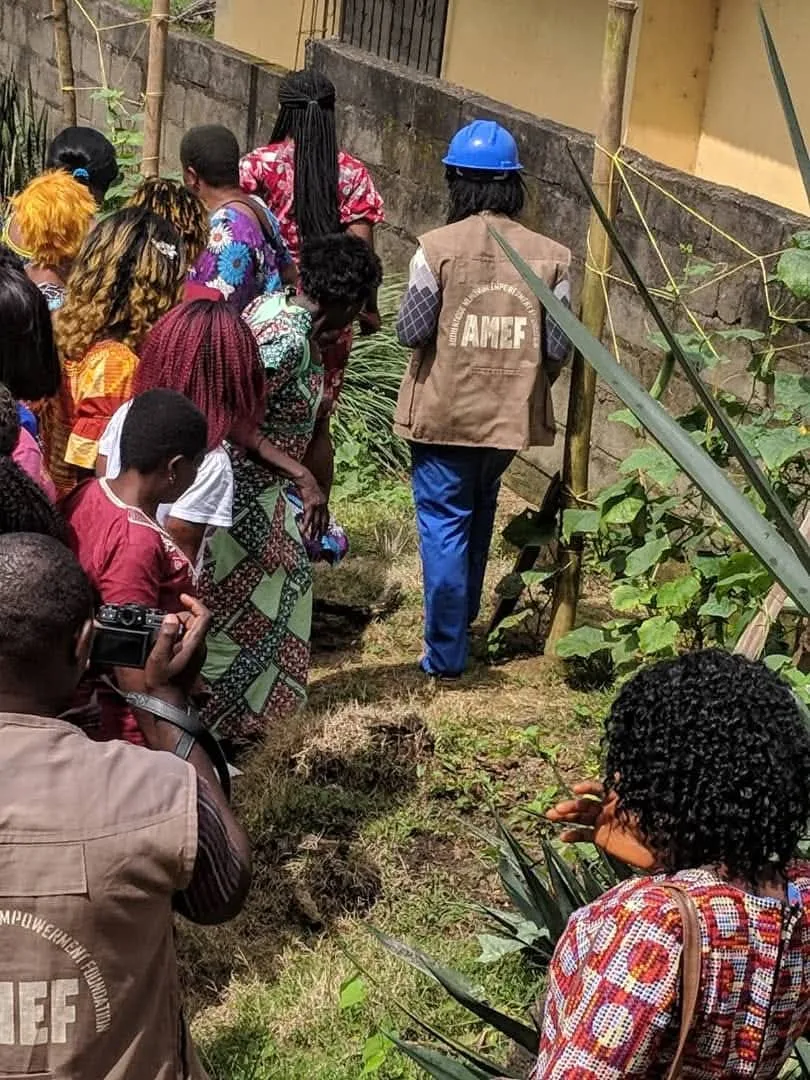
In education, AMEF has supported more than 15,000 children affected by crisis through initiatives including Neighbourhood Learning Corners, Temporary Learning Spaces, alternative education and other community-based learning approaches. Our work has also promoted menstrual hygiene, child protection, gender equality and safer learning environments.
Through our home-grown school feeding initiatives, AMEF has demonstrated how schools, communities and humanitarian partners can work together to reduce barriers to education and help vulnerable children remain in school.
Our protection and peacebuilding interventions similarly recognise that people cannot fully enjoy dignity when they live in fear. Protection, therefore, must remain at the centre of humanitarian action.
PROTECTING CIVILIANS IS EVERYONE'S RESPONSIBILITY
As humanitarian actors in the South-West Region, we remain concerned about the risks faced by civilians and humanitarian workers in crisis-affected communities. Women, children, persons with disabilities, older persons, displaced families and other vulnerable groups often bear the greatest burden of conflict and crisis. At the same time, humanitarian workers, volunteers and community actors continue to operate in complex and sometimes insecure environments.
On this World Humanitarian Day, AMEF joins the humanitarian community in calling for: The protection of civilians and humanitarian workers; Respect for International Humanitarian Law and International Human Rights Law; Safe, timely and unhindered humanitarian access; Respect for the humanitarian principles of humanity, neutrality, impartiality and independence; and A humanitarian space in which assistance can reach people based on need and without discrimination.
Humanitarian space must be protected. Humanitarian workers must be able to reach people in need safely. Communities must be able to access assistance without fear.
And civilians must never become targets or bargaining tools in situations of conflict.
The protection of civilians is not the responsibility of humanitarian organisations alone. It is a collective responsibility requiring action from government authorities, communities, armed actors, humanitarian organisations, civil society and all stakeholders with influence over the lives of affected populations.
LOCAL ACTORS MUST BE AT THE CENTRE
World Humanitarian Day also provides an opportunity to reflect on the future of humanitarian action in Cameroon. For AMEF, that future must include stronger locally led humanitarian action. Local and national organisations are often among the first responders and remain embedded within communities throughout prolonged crises. We understand local languages, cultures, social structures and community dynamics. We are often able to identify emerging needs quickly and reach communities that may be difficult to access through conventional humanitarian mechanisms. However, localisation must go beyond the participation of local organisations in coordination meetings or their role as implementing partners. If we are serious about locally led humanitarian action, localisation must include: equitable partnerships, predictable and flexible financing, capacity strengthening, shared decision-making, appropriate risk-sharing and recognition of local expertise. We therefore call upon donors, international organisations, government institutions and humanitarian coordination structures to continue investing in the capacities and leadership of Cameroonian organisations and community-based actors through the ABC approach now in place. Localisation is not simply about transferring implementation responsibilities. It is about transferring opportunity, resources, influence and leadership. A stronger national humanitarian system requires strong local organisations, strong community structures and partnerships built on mutual respect and accountability.
HUMANITARIAN ACTION MUST INVEST IN RESILIENCE
While humanitarian assistance remains essential, we must also ask how humanitarian action can help communities move from vulnerability towards greater resilience.
At AMEF, our experience demonstrates the importance of connecting humanitarian response with education, protection, livelihoods, peacebuilding and community resilience. A child returning to school is humanitarian action. A woman gaining the skills and resources to support her household is humanitarian action.
A community developing mechanisms to prevent violence is humanitarian action. A displaced family accessing protection and essential services is humanitarian action.
A young person choosing peace over violence is humanitarian action. A community volunteer supporting a vulnerable neighbour is humanitarian action. Humanitarian action is therefore not limited to the distribution of relief items. It is about restoring dignity, strengthening agency and creating pathways towards recovery. This requires us to invest not only in immediate needs, but also in the capacities of individuals, families, schools, community structures and local organisations to withstand future shocks.
A CALL TO COLLECTIVE ACTION
As we commemorate World Humanitarian Day 2026, AMEF calls upon all stakeholders to #ActForHumanity in practical and meaningful ways. To Government: continue strengthening the protection of civilians and humanitarian space, and facilitate safe and principled humanitarian access. To donors: increase and sustain humanitarian financing, particularly for neglected and underfunded crises, like ours, while ensuring that local actors have meaningful access to resources. To international humanitarian organisations: strengthen equitable partnerships with national and local organisations and recognise their expertise, leadership and proximity to affected communities. To civil society organisations: continue strengthening coordination, accountability, safeguarding and quality programming. To communities: continue promoting solidarity, peaceful coexistence and protection of the most vulnerable. To young people: become champions of peace, dignity, social cohesion and positive change. And to every humanitarian worker and volunteer: Remember why we do this work. Because behind every displacement figure is a family. Behind every child out of school is a future at risk. Behind every protection incident is a person whose dignity has been violated. And behind every humanitarian response is an opportunity to restore hope.
AMEF'S COMMITMENT
As we look ahead, AMEF reaffirms its commitment to working with communities, government authorities, UN agencies, donors, international and national organisations, civil society and other partners to build a humanitarian response that is more locally led, more inclusive, more accountable and more responsive to affected populations. We will continue to invest in children and education. We will continue to promote protection and the rights of vulnerable people. We will continue to support peacebuilding and social cohesion. We will continue to strengthen livelihoods and community resilience. And we will continue to advocate for humanitarian action that places human dignity at the centre.
Today, let us not only celebrate humanitarian workers. Let us also recognise the community volunteers who work quietly, the teachers who continue educating children in difficult circumstances, the women and young people building peace, the local organisations serving communities with limited resources, and, above all, the courage and resilience of affected communities themselves. The humanitarian challenge is enormous. But so is our collective capacity to act. From the South-West Region of Cameroon, AMEF joins the global humanitarian community with one clear message:
ACT FOR HUMANITY. PROTECT HUMAN DIGNITY. SUPPORT LOCAL ACTION. LEAVE NO ONE BEHIND. Happy World Humanitarian Day 2026.
*Atim Evenye Executive Director Authentique Memorial Empowerment Foundation (AMEF) Cameroon?
Reader comments
Comments are moderated to maintain a respectful, evidence-based conversation.
Amina R.
Clear context and strong sourcing.
David L.
The transparency section is especially helpful.