CAMAROONIAN JOURNALIST RAISES CONCERNS ABOUT THE OBJECTIVES BEHIND "TOURNAMENTS FOR PEACE" ORGANIZED IN COMMUNITIES ACROSS THE NORTH WEST AND SOUTH WEST REGIONS OF CAMEROON
Jeremi Romi questions the rationale behind the organization of "Peace and Unity tournaments" in most communities across the Northwest and Southwest regions of Cameroon
Jeremi Romi
Publisher Romi Info · Cameroon
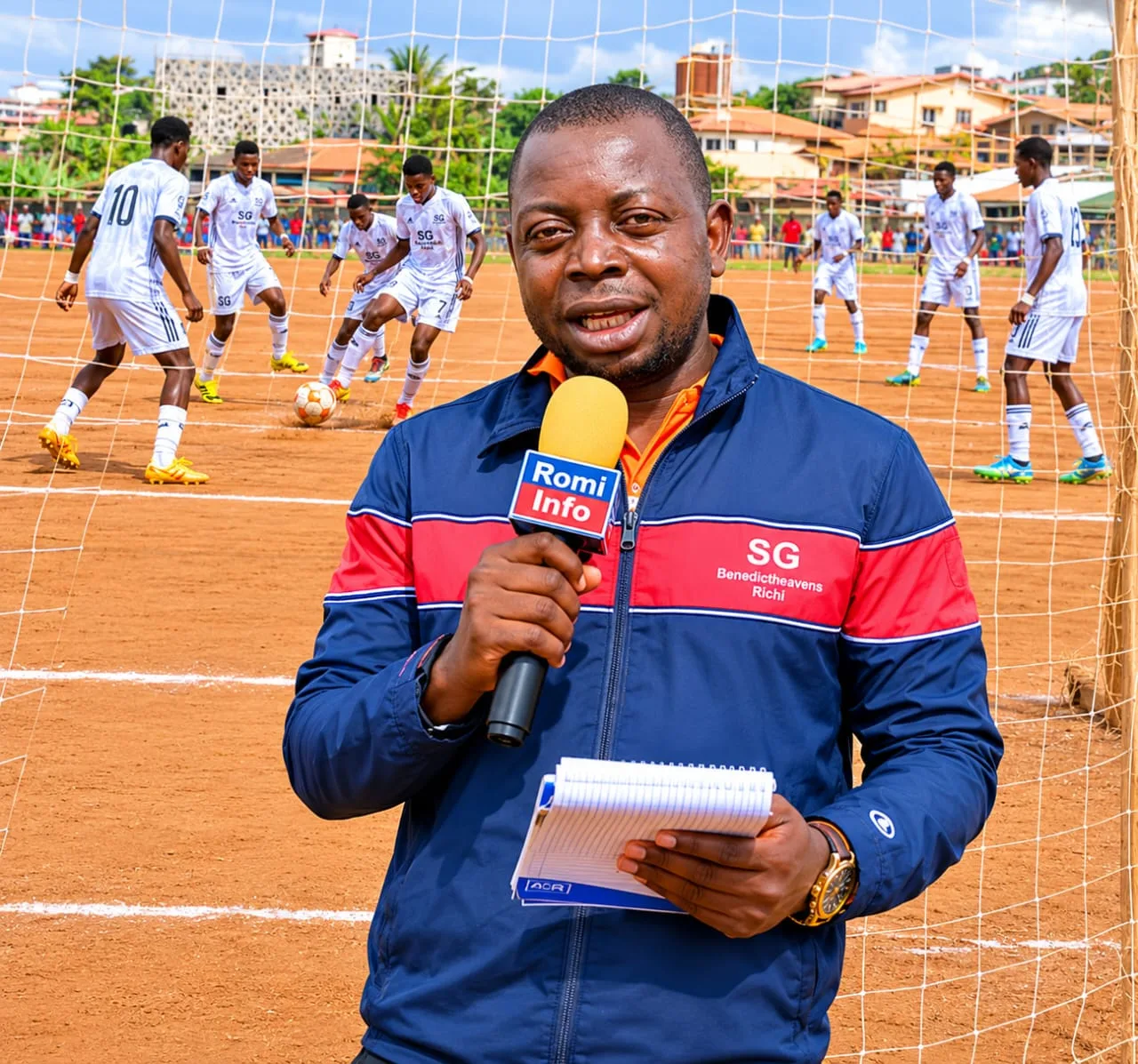
Cameroon — Every holiday season, communities across the Anglophone Regions come alive with the now familiar "Peace and Unity Football Tournament." Banners are mounted, jerseys are printed, trophies are unveiled, and huge sums of money are spent in the name of promoting peace and unity. There is no doubt that some of these tournaments are organised with genuine intentions. They bring people together, create moments of joy, and temporarily reduce tension within communities. Such initiatives deserve appreciation. However, it is equally true that not every tournament is driven by the desire for peace. Some have gradually become platforms for political influence, personal popularity, or rivalry among elites. Instead of working together, disagreements often arise over who should organise the tournament, whose name should appear on the trophy, or who should receive the political credit. If the objective is truly peace and unity, why can't our elites put aside their differences and organise one strong, well-coordinated tournament that belongs to the entire community rather than to individuals?
Sadly, once the final whistle is blown and the trophies are lifted, the temporary atmosphere of peace often disappears with the tournament. Communities return to the same divisions, misunderstandings, and rivalries that existed before the competition. It raises an important question: Was peace really achieved, or was it only borrowed for a few weeks? The greatest concern is the welfare of the young people who participate. Many spend weeks training and competing, only to return home with transport money or a token amount of 2,000 or 5,000 FCFA. Others sustain injuries that require medical attention, yet they receive little or no support after the tournament ends. Their dreams remain exactly where they started. Football is a powerful tool for bringing people together, but football alone cannot solve unemployment, poverty, hopelessness, or the lack of opportunities facing many young people. Imagine if the same resources invested in holiday tournaments were also used to organise entrepreneurship workshops, vocational training, digital skills programmes, agricultural innovation seminars, and career guidance sessions. Imagine if cup donors came together to establish scholarship schemes for brilliant but underprivileged students, provide startup grants for young entrepreneurs, or create community businesses capable of employing dozens of youths every year. That would be peace with purpose. That would be unity with impact.
A football tournament should not simply entertain a community for a few weeks; it should inspire a generation for years. Success should not only be measured by the number of goals scored or trophies won, but by the number of young people whose lives are transformed after the competition. We must also ask ourselves difficult but necessary questions. How many players discovered through these holiday tournaments have progressed to the MTN Elite One or Elite Two championships? How many have earned professional contracts? How many have received educational scholarships because of their talent? How many have been empowered to build successful businesses after the tournament? If the answers remain disappointing year after year, then perhaps it is time to rethink our priorities.
Holiday football tournaments are not bad. They remain an important part of our culture and can continue to promote friendship, recreation, and community spirit. But they should no longer end with medals, photographs, and closing ceremonies. The real trophy should be educated youths, skilled youths, employed youths, empowered youths, and united communities. Peace is not a football match that lasts ninety minutes. Peace is an investment in people. And that investment should continue long after the final whistle. This can also be adapted into a shorter, sharper editorial suitable for Facebook publication while retaining the same message. By Jeremi Romi a Journalist.
Reader comments
Comments are moderated to maintain a respectful, evidence-based conversation.
Amina R.
Clear context and strong sourcing.
David L.
The transparency section is especially helpful.