USDP Leader Calls for Clarity on Cameroon’s Political Succession
USDP leader Prince Michael Ngwese Ekosso calls for clarity on Cameroon’s succession, urging stronger institutions and an orderly transition.
Tamfu Ciduan Ndimbie
Publisher · Cameroon
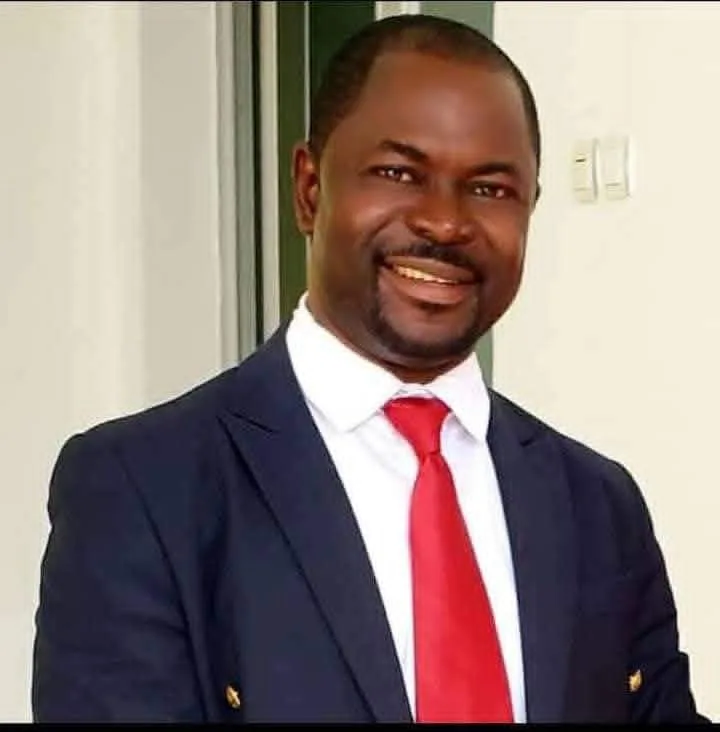
Prince Michael NGWESE EKOSSO National President of the United Socialist Democratic Party (USDP)
Cameroon — United Socialist Democratic Party (USDP) National President Prince Michael Ngwese Ekosso has called on Cameroon’s ruling CPDM leadership to provide greater clarity on the country’s political succession and future direction.
In a political reflection addressed to Cameroonians and the CPDM Central Committee, Ekosso said the country’s main challenge is not President Paul Biya’s long tenure in power, but the manner in which power has been exercised and the absence of a clear succession plan.
He criticised what he described as prolonged rivalry among senior officials and political elites, arguing that Cameroon’s wealth of talent could have been better mobilised to prepare the country for a smooth political transition. Ekosso also linked the current uncertainty to broader concerns including poverty, rising living costs, youth unemployment, corruption, divisions and limited prospects for citizens. The USDP leader said he does not blame individual government officials, but rather a system that, in his view, has prioritised the preservation of power over institutional continuity and preparation for the future.
He also questioned the growing public debate surrounding Ferdinand Ngoh Ngoh, the Secretary-General at the Presidency, urging those at the highest levels of government to address questions surrounding the exercise of presidential authority and the succession debate.
According to Ekosso, Cameroonians are seeking facts and clarification rather than political rhetoric, warning that prolonged silence could deepen speculation and public distrust.
He concluded by calling for stronger institutions, greater accountability and a political system that does not depend on a single individual.
“Cameroon must move forward,” Ekosso said, insisting that credible leadership requires the courage to take clear positions when issues of national importance arise.
Here is the full except of his reflection
MY POLITICAL REFLECTION TO CAMEROONIANS AND TO THE CPDM CENTRAL COMMITTEE:
My fellow countrymen, members of the ruling CPDM party Central Committe, on my part, I believe the real tragedy the country is facing at the moment is not just President Paul Biya's long tenure in power but the way in which power has been exercised. Instead of calmly preparing for succession, one often gets the impression that the elites, intellectuals, and high-ranking officials are kept in a state of perpetual rivalry.
What strikes me as most cynical is seeing competent men and women pitted against each other in the struggle for power when they could have been mobilized to build a shared vision for Cameroon.
Today, many prominent figures in the state are rejected or challenged by a segment of public opinion. Yet, they served for a long time in a system where they were not the sole decision-makers. The primary responsibility lies with the one who led and arbitrated this system for decades.
What shocks me and Cameroonians most is the lack of clarity regarding the succession.
After more than forty years in power, Cameroonians continue to speculate about the post-Biya era. This situation fuels tensions, divisions, and uncertainty. A great political legacy isn't just about lasting; it's also about preparing for the future and ensuring a smooth transition.
Personally, I'm not celebrating any factions or individuals. I simply regret that a country so rich in talent spent so much time waiting instead of preparing for the future.
In this cloudy moments of the absence of the President of the Republic, I do not think that people are truly missing Paul Biya in the sense of the word. What many Cameroonians are lamenting for are the consequences of more than forty years of governance: persistent poverty, the high cost of living, divisions, youth unemployment, corruption, and a lack of prospects.
The problem isn't his presence or absence.
The problem is the state the country is in after so many years. People don't really cry the absence of a President; they acknowledge a reality and its impact on the daily lives of citizens. A leader is also judged by the legacy he leaves behind. Today, it is this legacy that many are questioning.
On my part, I don't really blame the members of the government individually. I blame, above all, a system that, for decades, prioritized maintaining power over preparing for the future.
Paul Biya worked with some of the most intellectually brilliant collaborators in Cameroon. He knew how to surround himself with diverse skills but without ever organizing a clear political transition that would allow for the emergence of a new generation of leaders.
Today, many of those who have served the state for years find themselves competing with one another in a context where the question of succession remains central.
In my view, the main responsibility lies in the lack of preparation for the post-Biya era.
I am not looking for scapegoats among those who implement public policies. What I denounce and I am calling out is the selfishness of power when it becomes an end in itself and fails to prepare for a country's future. A nation should never depend on a single individual but on strong institutions and a prepared succession plan.
Oratory is certainly not what has governed Cameroon for decades. President Paul Biya has never been known as an omnipresent orator, yet he has led the country for many years. The question, therefore, is not whether Ngoh Ngoh is a great speaker or not.
If he believes certain questions deserve clarification, a few words will suffice. What many citizens expect is not a display of rhetoric but clarity. On my part, I feel that the real power dynamics are already visible and that everyone understands who wields decisive influence at the highest levels of government.
Cameroon must move forward. Ambiguities, unspoken truths, and prolonged silences fuel speculation more than they dispel it.
The opposition may be limited in its means of action, but it generally fulfills its role by denouncing and challenging the status quo. Those in power, however, have the power to act. This is why the silence of those in power is often more consequential than that of the opposition.
Credibility is also measured in moments when a position must be taken.
If silence is dictated by the fear of misrepresenting oneself, this raises another question: at this level of responsibility, is it an oratorical skill that counts, or it is the ability to publicly stand by one's positions? Citizens expect explanations, not a rhetorical performance.
Public opinion doesn't sign decrees, but no serious political leader can afford to ignore it indefinitely. Today, it may not determine who is elected, but it certainly contributes to their legitimacy or their rejection.
Perhaps. But when a subject sparks so much discussion within public opinion, it ceases to be a purely personal concern. Everyone is free to consider it important or not, but no one can prevent others from taking an interest.
The problem isn't that the dog barks while the caravan moves on. The problem is that when too many questions remain unanswered, doubts take root. Governing isn't just about moving forward; it's also about being accountable.
Incidentally, Ngoh Ngoh already plays, in my view, a role that far surpasses that of a mere collaborator. Since he has President Paul Biya's signature for certain acts, I often wonder what else is being kept hidden. Sometimes, it seems as though only the formal step of seizing power is missing. Meanwhile, the chair remains empty, both within the CPDM and among those who should be providing answers to Cameroonians' questions.
No, Ngoh Ngoh is not the government spokesperson. But when a matter raises so many questions and his name is mentioned in the public debate, it is legitimate for citizens to expect clarification from him. The question, therefore, is not whether he is the spokesperson but whether he deems it necessary to speak on a subject that is fueling public concern.
Indeed, it is not the commentary that interests citizens but the facts. When serious questions are raised in the public sphere, silence or evasive tactics do not dispel doubts. Cameroonians are less interested in comments than in clarifications.
Have the CPDM's top officials become as silent as the opposition? Faced with revelations that raise numerous questions, clear and responsible positions are expected. Silence can not be considered an answer. While citizens wonder, the chair remains empty. What is Ngoh Ngoh waiting for to speak out?
The chair is still empty. What is Ngoh Ngoh waiting for to break his silence and take responsibility by addressing the Cameroonian people?
Prince Michael NGWESE EKOSSO National President United Socialist Democratic Party (USDP)
Reader comments
Comments are moderated to maintain a respectful, evidence-based conversation.
Amina R.
Clear context and strong sourcing.
David L.
The transparency section is especially helpful.