Kamto’s Resignation: Has Cameroon’s Opposition Politics Reached a Turning Point?
Prof. Maurice Kamto’s resignation as MRC president has triggered fresh debate over the future of Cameroon’s opposition politics. His departure, alongside that of Mamadou Mota, raises questions about the MRC’s direction and leadership going forward. The development also puts renewed focus on the SDF’s declining influence and its efforts to rebuild ahead of the 2027 elections. The key question is whether Cameroon’s opposition is witnessing political decline—or the beginning of a new era of renewal.
Tamfu Ciduan Ndimbie
Publisher · Kumba, Cameroon
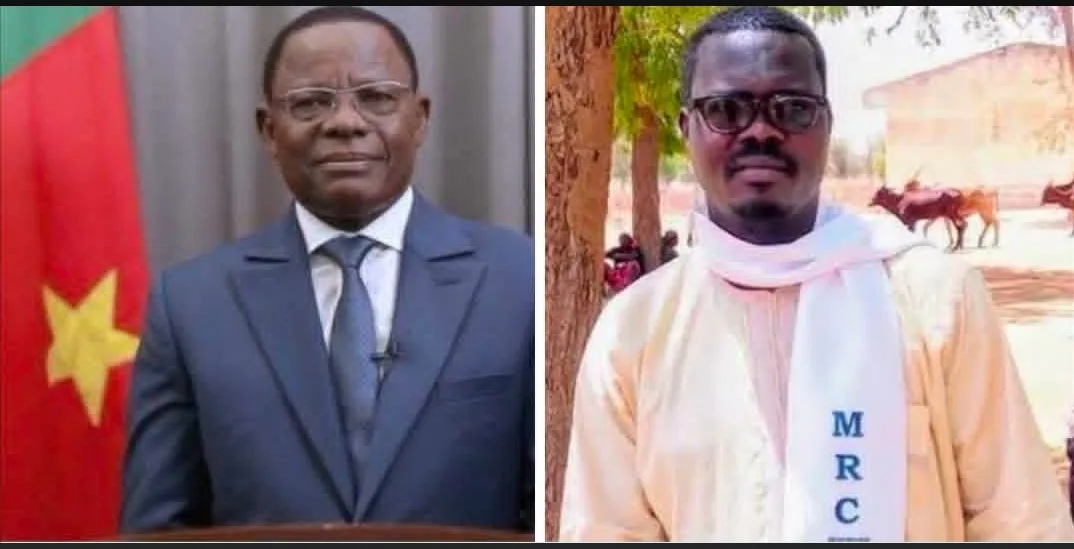
Prof. Maurice Kamto (left) and Mamadou Mota (right), former President and former First Vice-President of the Cameroon Renaissance Movement (MRC).
Kumba, Cameroon — Cameroon’s political landscape has been jolted by the resignation of Prof. Maurice Kamto as National President of the Cameroon Renaissance Movement (MRC), a decision that immediately raises questions about the future of the party and the wider opposition movement.
Kamto announced his resignation in a letter addressed to the MRC on Tuesday, September 8, saying the decision was taken in the “higher interest” of the party, its militants and sympathisers, and the broader “People of Change.” The decision takes effect immediately.
His departure was followed by that of MRC First Vice-President Mamadou Mota, who also resigned from his position. Mota reportedly said his decision was driven by what he described as pressure directed at him and the need to protect the interests of the party.
The simultaneous departures of two of the MRC's most prominent figures have therefore transformed what might otherwise have been an internal party development into a major national political story.
A dramatic change at the MRC.
Kamto has been the central figure of the MRC since its creation in 2012. His political profile expanded considerably after the 2018 presidential election, when he emerged as one of the principal challengers to President Paul Biya.
His resignation is particularly significant because it comes only months after he returned to the leadership of the MRC following a controversial period surrounding his political positioning and the party's internal affairs. According to reports, Kamto had been re-elected as MRC president during an extraordinary convention in December 2025. That convention was contested by some party members, while a legal dispute subsequently developed over the legitimacy of the party leadership.
The dispute reportedly involved expelled MRC member Okala Ebode, who challenged Kamto's legitimacy in court. A court hearing had reportedly been scheduled for September 24.
The timing of Kamto's resignation therefore adds another layer to an already complicated political and legal situation surrounding the MRC.
Has Kamto become politically irrelevant?
That is now one of the biggest questions confronting Cameroon's opposition. It would, however, be premature to conclude that Kamto has become irrelevant simply because he has resigned from the presidency of his party.
Political relevance is not determined solely by occupying a party leadership position. Kamto remains a nationally recognised opposition figure, a former presidential candidate and a political personality with an established support base.
His resignation could instead represent a strategic withdrawal, a response to internal difficulties, or the beginning of another political phase.
For now, Kamto himself has not indicated in the resignation letter that he is abandoning politics altogether. His statement, as reported, focuses on leaving the MRC presidency in what he considers the party's higher interest. Resigning from a party leadership position is not necessarily the same thing as retiring from politics.
What happens to the MRC?
The immediate question is who takes effective control of the MRC and how the party manages the vacuum created by the departure of both Kamto and Mota.
The MRC will also have to demonstrate that it can survive institutionally without its most recognisable political figure at the helm.
The challenge is significant because Kamto's political identity has become closely associated with the MRC since the party's creation.
At the same time, the MRC's regional structures have continued to publicly express support for the party leadership. On September 7, the MRC's regional branch in the North region of Cameroon reportedly reaffirmed its support for Kamto and the party's Directorate, while complaining of difficulties and alleged obstacles facing the party.
His resignation just one day later makes the political implications of that declaration even more striking.
And what about the SDF?
Kamto's resignation also comes at a difficult moment for the Social Democratic Front (SDF). Once the dominant opposition force in Cameroon, the SDF has suffered a steady decline in electoral influence over the years. Its current president, Joshua Osih, has nevertheless been positioning the party for the 2027 legislative and municipal elections. In June, the SDF held a National Executive Committee meeting in Bamenda and announced preparations for the upcoming elections, including the creation of a National Electoral Preparedness Commission.
The party has also continued parliamentary activity. In June, Osih and the SDF parliamentary group presented several proposed laws covering issues including femicide, child protection, public-office asset declarations and national unity.
These activities complicate the popular narrative that the SDF is simply politically finished.
Is the SDF at its “menopause”?
The phrase may be politically provocative, but it raises a legitimate question: Has the SDF passed its political peak?
The party founded by the late Ni John Fru Ndi was once the most powerful opposition force in the country. Today, its electoral footprint is considerably smaller, and it faces the challenge of reconnecting with voters, particularly in the Northwest and Southwest regions where it historically enjoyed strong support. Recent analysis has described the SDF as facing a period of electoral decline while attempting to rebuild its political base ahead of the 2027 elections.
But calling the party “menopausal” may be more rhetorical than analytical. A political party can decline, reorganise and return to relevance. The SDF's current leadership is clearly attempting to position the party for another electoral contest rather than accepting political extinction.
Could Kamto's departure actually create space for a new opposition generation?
This may ultimately be the most important question. Cameroon's opposition has for decades been dominated by familiar personalities and parties. Kamto's resignation could create an opportunity for younger political actors to emerge and redefine the opposition. The same applies to the SDF. If the traditional opposition parties fail to renew their leadership, political messaging and organisational structures, they risk losing further ground to emerging movements and independent political actors. But if they successfully reinvent themselves, the current turbulence could become a period of renewal rather than decline.
A crossroads for multiparty politics.
Kamto's resignation does not, by itself, mean that multiparty politics in Cameroon has ended.
Cameroon continues to have numerous legally recognised political parties, and opposition actors remain active in national politics. The real issue is whether these parties can translate their existence into effective political competition, credible grassroots organisation and meaningful electoral influence. Kamto's resignation therefore presents Cameroon with a political paradox. One of the country's most prominent opposition figures has stepped away from the leadership of his party at precisely the moment when the opposition needs strong organisation ahead of future elections.
Whether this weakens the opposition or creates room for a new political configuration remains to be seen.
Has Maurice Kamto's resignation marked the end of an era in Cameroon's opposition politics or is it the beginning of another political chapter?
And with the SDF struggling to recover its former influence, is Cameroon's traditional opposition entering a period of political menopause, or is a new generation of opposition politics about to emerge?

Reader comments
Comments are moderated to maintain a respectful, evidence-based conversation.
Amina R.
Clear context and strong sourcing.
David L.
The transparency section is especially helpful.